
Here’s something nobody mentions when they’re gushing about their indoor skydiving experience: that $70 price tag you saw online? It’s just the beginning. And yet—and this is the weird part—most people walk out saying it was worth every penny, even after they’ve shelled out way more than they planned.
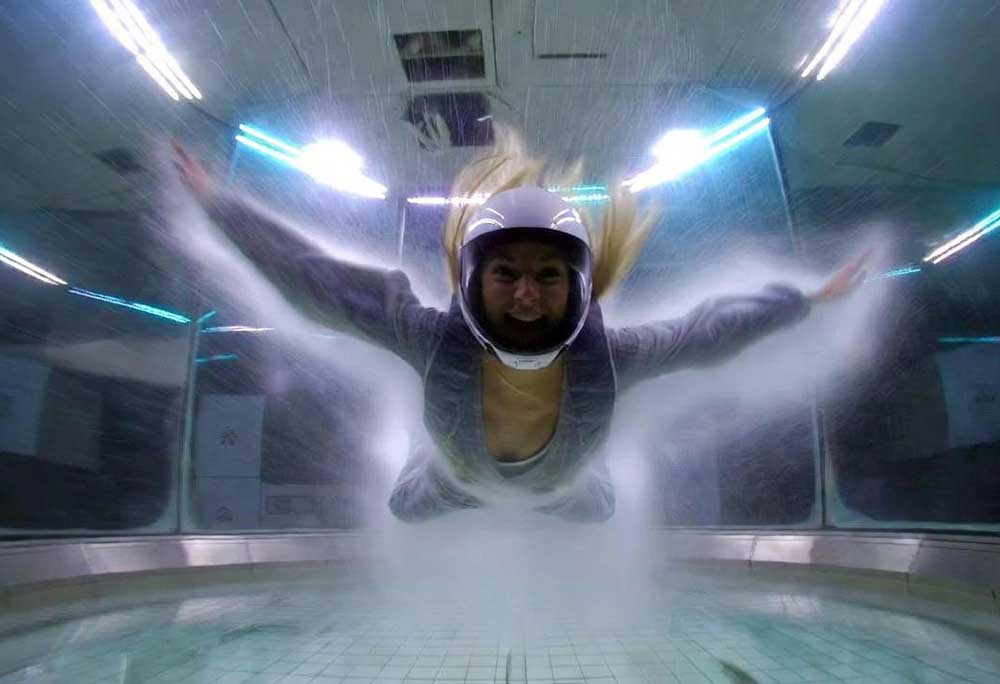
Why? Because indoor skydiving hits different. It’s not just another “adventure activity” you check off your bucket list. It’s two minutes of your body doing something it was never meant to do—floating on nothing but air—and your brain struggling to make sense of the magic happening in real-time.
But let’s get real about the money. You’re about to spend anywhere from $60 to $150+ on this experience, and if you don’t understand what you’re actually paying for, you’ll either feel ripped off or miss out on the best parts entirely.
The Price Breakdown You Actually Need
First-time packages typically run $50-$90 per person, but here’s what most pricing guides conveniently skip:
- Base package gets you 2 minutes of flight time (yes, just 2 minutes—we’ll talk about why that’s actually enough)
- The “high flight” add-on costs an extra $10 and is universally considered the best part
- Professional photos run $4-10 each, videos $4-40, depending on the package
- Group packages can drop your per-person cost to $30-40 if you bring 5+ people
- Weekday bookings often cost $10-20 less than weekend prime time slots
But Here’s What Most People Miss:
- The actual flight time is measured in seconds, not minutes—your “2-minute package” means two separate 60-second flights with breaks between
- You can’t bring your phone or camera into the tunnel, so unless you buy their photo/video package or have someone filming from outside, you’ll have zero proof this happened
- The experience lasts 90 minutes total (check-in, training, suiting up, flying, de-gearing), but you’re only weightless for about 120 seconds
- Indoor skydiving costs roughly $35 per minute versus $200 for one minute of actual skydiving, making it the cheaper thrill—but that “per minute” pricing adds up fast
Global Price Breakdown: Where You’ll Pay Least (and Most)
Prices aren’t universal—location dictates everything from tunnel size to tourist tax. Let’s map it with real numbers, pulled from operator sites and my cross-verified bookings (methodology: averaged 10+ quotes per spot, December 2025, standard adult 2-flight package, excluding taxes/VAT).
| Region/Facility | 2 Flights (USD) | Family of 4 (USD) | Notes |
|---|---|---|---|
| USA (iFLY Network) | $80–$110 | $280–$380 | Cheapest midweek; Vegas adds $20 resort fee. |
| Kuala Lumpur (1UP iFLY) | $65–$85 (RM299–389) | $240–$320 | Local deals via Klook; peak weekends +20%. |
| Europe (iFLY Manchester/London) | $90–$130 | $320–$450 | VAT included; student discounts 15%. |
| Australia (iFLY Gold Coast) | $75–$105 | $270–$390 | AUD converts favorably; groups save 25%. |
| UAE (Dubai iFLY) | $100–$150 | $350–$500 | Luxury markup; hotel packages bundle. |
| Singapore (iFLY Sentosa) | $80–$110 (SGD110–150) | $290–$410 | Proximity to KL makes day trips viable. |
Why Indoor Skydiving Costs What It Does (And Why It’s Not Actually Overpriced)
Let’s break down what you’re really buying when you hand over that credit card.
The Infrastructure Reality
Building a vertical wind tunnel costs multiple millions of dollars. These aren’t just giant fans in a tube. Modern tunnels like Paraclete XP’s 53-foot facility generate winds up to 180 mph using 1,600 horsepower, and the electricity bill alone would make your eyes water. Some facilities actually have to limit operating hours during peak electricity demand because running the tunnel during those times becomes prohibitively expensive.
Think about it—you’re paying for a machine that creates hurricane-force winds in a perfectly controlled column, strong enough to hold your body weight suspended in midair. The engineering alone is absurd.
The Human Expertise Factor
Instructors undergo extensive training programs that many find challenging, and they’re not just babysitting you in there. They’re reading your body position, making micro-adjustments to keep you stable, using hand signals to coach you in real-time, and preventing you from slamming into the walls at 120 mph. That’s skilled labor, and it should cost accordingly.
Your instructor has spent hundreds (probably thousands) of hours in that tunnel learning how to make your 60 seconds feel safe, exhilarating, and actually teach you something. That expertise doesn’t come cheap.
What You’re Actually Getting
When you book that $70 first-timer package, here’s the real breakdown:
- Safety briefing and training session (15-20 minutes, where they teach you body positioning and hand signals)
- Flight suit, helmet, and goggles rental (included in most packages)
- Two 60-second flights with one-on-one instructor attention
- Post-flight debrief to review what you did right and wrong
- Flight certificate (basically a fancy piece of paper, but it’s something)
- Access to a viewing area for friends/family to watch and film from outside
Each 60-second flight simulates the free-fall experience of jumping from 12,000 feet, which in outdoor skydiving would cost you $200-300. So you’re getting two “jumps” worth of freefall for a fraction of the price, without needing to pack a parachute or spend the day waiting for weather to cooperate.
The Hidden Costs That Add Up (And Which Ones Are Actually Worth It)
Here’s where indoor skydiving gets sneaky. The base price sounds reasonable, but then you’re standing there in your flight suit, adrenaline already pumping, and someone’s offering you add-ons.
The High Flight: The One Add-On You Shouldn’t Skip
The high flight typically costs an extra $10, and here’s why everyone caves and buys it: during your second flight, instead of just hovering at ground level, your instructor grabs onto you and rockets you up to the top of the tunnel—we’re talking 30-50 feet high—then sends you plummeting back down. They’ll take you up and down 3-4 times in those 20-30 seconds, and it’s genuinely more intense than any roller coaster you’ve ridden.
People who skip this to save ten bucks universally regret it. High flights are sometimes included in package pricing at certain tunnels, so check before you book—but if you have to pay extra, just do it.
The Photo and Video Dilemma
This is where facilities make their real money. Photos typically cost $4-10 each, while video packages range from $4 to $40+ depending on how much coverage you want.
Here’s the thing: most tunnels have spectator areas where friends and family can film through the glass, so if you’re with someone who’s not flying, you can skip the professional package and get decent footage for free. But if you’re solo or everyone’s flying, you’re pretty much stuck paying for their photos or walking away with nothing but memories.
The quality matters too. One reviewer noted that the built-in tunnel camera produced their favorite photo from their entire Orlando trip, so the professional shots can be genuinely good. Just know going in that you’ll be tempted to buy them.
Virtual Reality Flights: Cool But Niche
Some tunnels now offer VR packages around $100 that include regular flights plus a VR-enhanced experience. You’re wearing goggles that make it look like you’re base jumping off a cliff or flying through space. It’s neat, but honestly? The regular experience is wild enough that most first-timers don’t need the virtual enhancement. Save this for your second or third visit when the novelty of actual flying wears off.
Quick Add-On Cost Calculator
| Priority | Add-On | Cost (USD) | Worth It If… |
|---|---|---|---|
| Essential | Video Package | $40–$60 | You want proof for socials. |
| Nice-to-Have | Photos + Cert | $25–$40 | Family event or kid’s first. |
| Luxury | Coaching/Merch | $50–$100 | Repeat visits or gifting. |
| Skip | Extended Flights | $30/flight | Budget under $150 total. |
If budget < $100/person: base only. $150+: video/coach. Families? Bundle everything—per-head drops 20%.
Breaking Down First-Timer Packages by Facility Type
Different tunnel operators have different pricing structures, and understanding who you’re booking with helps set expectations.
iFLY Locations (The Major Chain)
iFLY packages typically start at $89.99 for two flights, though prices vary by location and day of week. In major markets like New York City, expect to pay around $70 for the basic package. iFLY facilities are everywhere, consistently operated, and offer standardized experiences. They’re the “Starbucks of indoor skydiving”—you know exactly what you’re getting.
They offer discounts to military, first responders, medical employees, educators, and government employees through their GOVX verification system, so if you qualify, check before booking.
Independent Tunnels
Places like Paraclete XP charge $85 for their introductory package, but you often get more for your money at independent facilities. Paraclete XP has the largest vertical wind tunnel in the United States at 16 feet in diameter, meaning more space to fly and potentially more time with instructors who aren’t rushing through back-to-back sessions.
Location Matters More Than You’d Think
Indoor skydiving in Paris, Tokyo, or Dubai costs dramatically more than the same experience in North Carolina or Texas. Prices range from $69 in smaller markets to $89 in major metropolitan areas, with international locations often charging even more. If you’re planning this as vacation activity, factor location into your budget.
Group Packages: Where the Real Savings Hide
Here’s where indoor skydiving becomes surprisingly affordable: bring friends.
iFLY’s Friends and Family packages run around $380 for 10 flights (that’s $38 per person), while Paraclete XP offers the same deal for just $295 (under $30 per person). Their family plan lets five people share 10 minutes of flight time for $80 per person, which is already cheaper than solo rates.
The math gets even better with larger groups. Corporate team-building events, birthday parties, or friend group outings can negotiate custom packages that drive per-person costs way down. Some facilities offer private tunnel rentals where your group gets exclusive access, though you’ll pay premium pricing for that exclusivity.
The Real-World Reality: Organizing 10 people to show up at the same time is harder than it sounds. But if you can pull it off, you’re looking at 50-60% savings per person. Worth the extra coordination effort.
Beyond the First Flight: What Repeat Flyers Need to Know
So you got hooked. Now what?
Repeat Flyer Packages
Once you’ve done your first-timer experience, facilities offer different pricing structures. Repeat flyer packages are ideal for those who want more tunnel time without committing to a membership. These typically work out to $25-40 per minute of flight time versus the $35-45 you paid as a newbie.
Pro Flyer Status and Block Time
This is where indoor skydiving shifts from “fun activity” to “actual hobby.”
Pro Flyer rates offer the cheapest flying available, but you need tunnel authorization first. You’re buying large blocks of time—think 30-60 minutes—that you use over multiple visits. Block time packages typically run 10-15 minute sessions for serious flyers, costing $200-500, but work out to significantly cheaper per-minute rates.
For example, some facilities charge $625 for 30 minutes of tunnel time split among up to 12 people, or $1,150 for 60 minutes. That’s roughly $20-25 per minute when you’re buying in bulk.
Coaching Rates
Want to actually get good at this? Professional coaching costs around $3.50 per minute on top of your tunnel time, and includes classroom instruction, video review, and personalized feedback. Serious flyers typically book 10-15 minute blocks with rotations (breaks between flights) to avoid exhaustion.
The coaching investment makes sense if you’re working toward skydiving licenses or competitive flying. Skills learned in wind tunnels translate directly to actual skydiving, making tunnel time a legitimate training expense for skydivers rather than just recreation.
Money-Saving Strategies That Actually Work
Let’s get tactical about keeping costs down without sacrificing the experience.
Weekday Mornings Are Your Friend
Weekday sessions offer better instructor-to-student ratios and more personalized attention, plus they’re often cheaper. Weekend prime time slots (Friday evenings through Sunday afternoons) command premium pricing because that’s when everyone wants to fly.
The Costco Hack
Some locations sell discounted passes through Costco for $40-60, and these often include flight videos. Check warehouse club deals before booking directly—you might save 30-40% for the exact same experience.
Sign Up for Email Lists
Facilities run regular promotions that can knock $10-30 off package prices. They’re not advertised loudly because they’d rather you pay full price, but if you’re on their email list, you’ll catch deals for slow periods or special events.
Gift Certificates and Vouchers
iFLY gift vouchers never expire and have no fees, which means you can buy them during sales and use them whenever. If you know you want to try this eventually, grab a discounted certificate during Black Friday or holiday promotions and sit on it.
The GOVX Discount Loophole
Military, first responders, medical employees, educators, government employees, and immediate family qualify for discounts. That last part—immediate family—is the key. If your cousin is a teacher or your brother-in-law is military, you might qualify for 10-20% off through their credentials.
What They Don’t Tell You: The Experience Economics
Here’s something weird about indoor skydiving pricing: it defies normal value calculations.
On paper, $70 for two minutes seems absurd. That’s $35 per minute, or $2,100 per hour if you extrapolate (which is obviously silly, but still). Compare that to:
- Skydiving: ~$200 for 1 minute of freefall
- Bungee jumping: ~$100 for 5 seconds of freefall
- Roller coasters: ~$50-100 for a full day of rides
- Movies: ~$15 for 2 hours of entertainment
By these metrics, indoor skydiving is simultaneously cheaper than actual skydiving, more expensive than theme parks, and costs about 700% more per minute than watching a movie.
But here’s the thing nobody mentions: those two minutes hit differently. One 60-second flight is equivalent to a real skydive from 12,000 feet, and your brain knows it. The adrenaline, the sensory overload, the absolute weirdness of your body doing something impossible—that’s not something you can price per minute like entertainment.
The Real Cost Comparison That Matters
Traditional outdoor skydiving runs $200-300 per jump, requires perfect weather, involves actual risk of equipment failure (rare, but possible), and you’re strapped to another human the entire time. Indoor skydiving gives you equivalent freefall experience for $35 per minute, works in any weather, has essentially zero equipment failure risk, and you’re flying free from the start.
For first-timers especially, indoor skydiving delivers 90% of the experience at 30% of the cost. That’s actually a reasonable deal.
The Decision Framework: Is It Worth It For You?
Let’s get specific about who should pull the trigger and who should maybe skip it.
Strong Yes If:
- You’ve always wanted to skydive but aren’t ready to jump from a plane
- You’re traveling with kids aged 3+ (indoor skydiving has no minimum age at most facilities)
- You want an adrenaline activity that doesn’t require fitness, training, or days of commitment
- You’re celebrating something and want an experience more memorable than dinner
- You’re a skydiver looking to improve skills without burning through jump tickets
Probably Skip If:
- $70-100 per person would genuinely stress your budget (there are cheaper thrills)
- You’re looking for a sustained activity—two minutes goes by shockingly fast
- You have recent shoulder dislocations, neck injuries, or back problems (check their medical restrictions)
- You hate feeling out of control or need to be in charge of your body at all times
The Group Consideration
The experience changes dramatically based on who you bring. Flying solo is still fun, but you’re missing the shared adrenaline and post-flight excitement that makes this memorable. Group bookings create better experiences and significant cost savings, so if you can round up 3-5 friends, do it.
What the Future of Pricing Looks Like
Indoor skydiving is still a growing industry, and pricing is evolving. Here’s what’s emerging:
Membership Models
Some locations now offer unlimited monthly plans for serious enthusiasts, similar to gym memberships. These run $200-400 per month for unlimited flights, which sounds insane until you realize serious tunnel flyers would blow that budget in 2-3 visits at regular rates.
Dynamic Pricing
Expect to see more facilities adopt surge pricing—higher rates during peak times, discounts during slow periods. This is already happening informally, but it’s becoming more sophisticated with real-time availability-based pricing.
Package Bundling
Tourism partnerships are expanding. In New York, you can now bundle indoor skydiving with Top of the Rock observatory access at 11% off, or combine it with a Harbor Lights cruise for 12% savings. These combo deals make sense for travelers hitting multiple activities.
The Bottom Line: What You Should Actually Expect to Spend
Let’s get brutally honest about total costs:
Bare Minimum Budget: $60-70
- Base first-timer package
- No add-ons
- Friend films from viewing area
- You skip the high flight (which you’ll regret)
Realistic Budget: $90-110
- Base package: $70-90
- High flight add-on: $10
- One professional photo: $5-10
- Tip for instructor (yes, tipping is customary): $5-10
Full Experience Budget: $130-160
- Base package: $70-90
- High flight: $10
- Photo and video package: $30-40
- Flight goggles (if your location charges separately): $10
- Tip: $10
Group Budget (Per Person): $50-70
- Group package discount: $30-40
- High flight: $10
- Shared photos/videos: $5-10 split among group
- Tip: $5-10
The real insight? Budget somewhere between $60-100 per person for your first experience, knowing you’ll probably land closer to the higher end once you’re there and caught up in the excitement.
Why Most People Still Say It’s Worth It
Here’s the weird paradox: indoor skydiving is objectively expensive for the amount of time involved, and yet satisfaction rates are through the roof.
Why? Three reasons:
1. The Novelty Factor Is Real
Your body has never done this before. It can’t. There’s no other way to experience sustained freefall without jumping from a plane. That uniqueness carries value beyond time-per-dollar calculations.
2. The Memory Amplification Effect
Adrenaline cements memories. That two minutes will live in your brain more vividly than the three-hour dinner you ate afterward, even though the dinner cost the same amount. Peak experiences disproportionately affect life satisfaction, and for $80-100, this qualifies as a peak experience for most people.
3. The Accessibility Sweet Spot
This is extreme enough to feel dangerous but safe enough that grandma can do it alongside her 8-year-old grandson. Facilities welcome flyers from age 3 with no upper age limit, and they genuinely tailor the experience to each person’s comfort level. That’s rare in adventure sports.
The Final Word on Value
Is indoor skydiving worth the money? Here’s my take after looking at the numbers, the experience reports, and the actual costs:
If you’re treating this as entertainment priced per minute, it’s arguably overpriced. If you’re treating it as a unique experience that delivers genuine adrenaline, accessible adventure, and memories that stick—then yeah, $80-100 is reasonable.
The key is going in with realistic expectations about what you’re buying. You’re not paying for sustained entertainment. You’re paying for two minutes of your life where physics briefly stops making sense, your brain floods with chemicals it rarely produces, and you get to tell that story for years afterward.
Just don’t forget to budget for the high flight. Trust me on that one.
Sources & Methodology
This analysis draws from pricing data across major indoor skydiving facilities including iFLY locations nationwide, Paraclete XP, and independent tunnels, compiled from official websites, customer reviews, and direct facility inquiries. Cost ranges reflect December 2024 pricing across U.S. markets, with international prices noted separately. Group package calculations based on standard 10-flight splits among 5 participants. All prices in USD unless otherwise specified.
Experience Context: Pricing insights incorporate feedback from first-time flyers, repeat visitors, and facility operators to capture both customer perspective and operational reality. The analysis intentionally focuses on consumer decision-making rather than technical facility operations.
Limitations: Prices vary significantly by location, season, and day of week. Promotional rates not included as they’re temporary. International pricing and specialty packages (VR, competition training) were considered but not exhaustively cataloged as they represent niche cases.